How to Become a Phlebotomist in Alaska (2026)
See if you qualify for Phlebotomy programs
Answer a few questions in 2 minutes. Free, no commitment.
Phlebotomists in Alaska earn a median annual salary of $46,110, which is higher than the national median of $43,660 for this occupation. The state does not require phlebotomists to hold a specific license or certification, but many employers, including hospitals and laboratories, may prefer or require national certification. Training timelines vary by program, but phlebotomy can be a relatively short healthcare training path for those looking to enter the field in Alaska.
Key Points
- Phlebotomists collect blood samples through venipuncture and capillary puncture for laboratory analysis, transfusions, and medical research.
- The median annual phlebotomist salary in Alaska is $46,110, which sits roughly $2,450 above the national median of $43,660.
- Most phlebotomy training programs in Alaska take 4 to 16 weeks to complete, depending on whether you choose an accelerated or semester-length format.
- Alaska does not require state certification for phlebotomists, though national certification from the NHA, ASCP, or AMCA is expected by most employers.
- The U.S. Bureau of Labor Statistics projects 6% job growth for phlebotomists from 2024 to 2034, faster than the average for all occupations.
What Does a Phlebotomist Do?
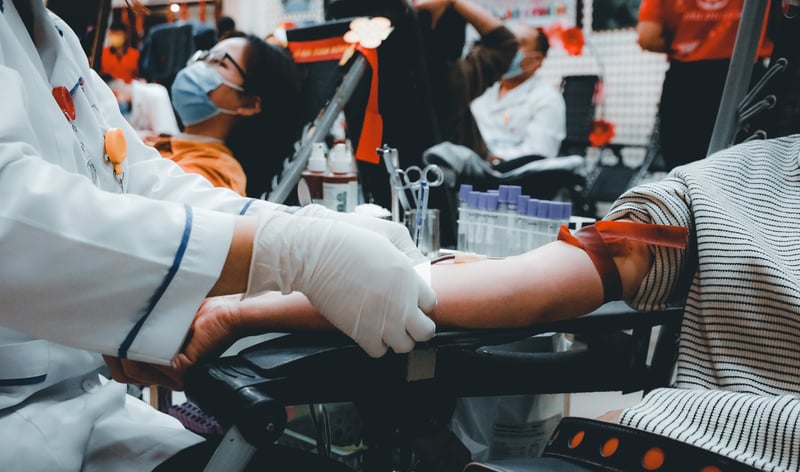
A phlebotomist draws blood from patients and donors for diagnostic testing, transfusions, and research. The role goes beyond inserting a needle. Phlebotomists verify patient identity, select the correct collection tubes based on the ordered tests, label specimens accurately, and transport samples to the laboratory under proper handling conditions.
Day-to-day responsibilities include:
- Performing venipuncture (drawing blood from a vein) and capillary puncture (fingerstick or heelstick collection)
- Explaining procedures to patients and calming those who experience anxiety around needles
- Following infection control and safety protocols, including proper sharps disposal and personal protective equipment use
- Maintaining and organizing blood collection equipment and specimen processing areas
- Documenting collection times, specimen conditions, and any complications in the patient's electronic health record
In Alaska, phlebotomists at facilities like Blood Bank of Alaska also support community blood drives. Because of the state's size, some positions involve working at rural health clinics where collected specimens are sent to larger laboratories for processing.
How to Become a Phlebotomist in Alaska
Alaska is one of several states that does not require a state license or state-issued certification to practice phlebotomy. There is no state regulatory board overseeing the profession. However, most healthcare employers in Alaska require or strongly prefer candidates who hold a national certification credential. The practical steps to enter the field follow a clear sequence.
Step 1: Meet the Basic Requirements
Most phlebotomy training programs require applicants to hold a high school diploma or GED. You must typically be at least 18 years old, pass a criminal background check, and provide proof of immunizations before starting clinical rotations.
Step 2: Complete a Phlebotomy Training Program
Training programs cover both classroom instruction and hands-on clinical practice. Coursework typically includes human anatomy and physiology (with a focus on the circulatory system), medical terminology, blood collection techniques, specimen handling and processing, infection control, and patient communication.
Programs are available through Alaska's community colleges and vocational schools, as well as online programs with local clinical components. The Penn Foster Phlebotomy Technician program, available on Dreambound, is an online, self-paced option that includes hands-on externship experience and a certification exam prep course with a test voucher included. Graduates are prepared to sit for industry certification exams and qualify for entry-level positions.
Step 3: Complete Required Clinical Hours
Every credible training program includes a clinical practicum where students perform supervised blood draws on real patients. Most national certification bodies require documentation of a minimum number of successful venipunctures and capillary sticks before you can sit for the exam. The American Society for Clinical Pathology (ASCP), for example, requires a minimum of 100 successful unaided collections.
Step 4: Pass a National Certification Exam
Three organizations offer widely recognized phlebotomy certification exams:
- National Healthcareer Association (NHA): Certified Phlebotomy Technician (CPT) exam, 100 scored questions plus 20 pretest questions, two-hour time limit. The exam application fee is $129 through the NHA Store.
- American Society for Clinical Pathology (ASCP): Phlebotomy Technician (PBT) exam, 80 multiple-choice questions, two-hour time limit.
- American Medical Certification Association (AMCA): Phlebotomy Technician Certification. The AMCA exam runs two hours and covers 100 multiple-choice questions. AMCA provides free study guides and unlimited practice tests to candidates. Alaska employers accept credentials from any of these agencies. The NHA CPT is widely held nationally because many training programs, including Penn Foster, build NHA exam preparation directly into their curriculum.
Step 5: Apply for Positions
Once certified, begin applying at hospitals, laboratories, clinics, and blood donation centers. In Alaska, the largest employers include Providence Health and Services, Foundation Health Partners, Alaska Native Tribal Health Consortium, and national laboratory chains like Quest Diagnostics and LabCorp. Job openings are most concentrated in Anchorage and Fairbanks, though rural facilities also post openings, sometimes with travel or relocation incentives.
Preparing a resume that lists your certification credential, clinical hours completed, and any additional training (such as CPR/BLS certification) will help you stand out. Networking through your training program's clinical externship site is also one of the most direct paths to a first position, since supervisors who see your work firsthand can advocate for your hire.
Phlebotomist Salary and Job Outlook in Alaska
The median annual wage for phlebotomists in Alaska is $46,110, according to the U.S. Bureau of Labor Statistics (May 2024 data). This is approximately $2,450 higher than the national median of $43,660.
Phlebotomists working at outpatient care centers and hospitals tend to earn more than those at physician offices, according to BLS industry data. Phlebotomy also serves as a stepping stone to higher-paying healthcare roles. With additional education, phlebotomists can advance into medical laboratory technician positions, clinical laboratory scientist roles, or pursue nursing or medical assisting credentials.
Nationally, the U.S. Bureau of Labor Statistics projects 6% job growth for phlebotomists from 2024 to 2034, faster than the average for all occupations. Approximately 18,400 openings are expected each year, driven by retirements, transfers to other occupations, and the rising demand for medical testing services as the U.S. population ages.
According to the 2023 Alaska Healthcare Workforce Analysis, healthcare is the state's largest employment sector, with nearly 43,000 jobs comprising 11% of the total Alaska workforce. Blood analysis remains a standard part of diagnostics, routine screenings, and chronic disease management, which supports steady demand for phlebotomists across the state.
Thinking about which phlebotomy training path fits your timeline and budget? Dreambound is a free platform that helps students compare accredited training programs across the United States. Browse phlebotomy programs on Dreambound to see what is available and compare options side by side.
Paying for Your Phlebotomy Training
Phlebotomy training costs vary depending on the type of program and institution. Community college certificate programs in Alaska typically charge between $1,500 and $3,000 for in-state students, while private vocational schools and online programs may range from $700 to $3,500.
If cost is a concern, Alaska offers several funding options that can cover part or all of your tuition:
- WIOA (Workforce Innovation and Opportunity Act): Alaska's Department of Labor administers WIOA funding through the Alaska Job Center Network. Eligible jobseekers can receive Individual Training Accounts that cover tuition for approved training programs. Priority is given to recipients of public assistance, low-income individuals, and veterans.
- Pell Grants and Federal Financial Aid: If your program is offered through an accredited community college, you may qualify for Pell Grants or federal student loans through FAFSA. Alaska Job Centers note that WIOA funds can sometimes be combined with Pell Grants.
- Payment Plans: Many training schools and Dreambound partner programs offer monthly payment plans that break tuition into manageable installments.
For additional information on financial aid pathways, read Dreambound's guide on how to access government funding for education.
Frequently Asked Questions
Does Alaska require certification to work as a phlebotomist?
Alaska does not require state certification or licensure for phlebotomists. However, most hospitals, laboratories, and clinics in the state expect candidates to hold a national certification from agencies like the NHA, ASCP, or AMCA before hiring. Earning certification also increases your starting pay and gives you an edge over uncertified applicants.
How much do phlebotomists make in Alaska?
The median annual salary for phlebotomists in Alaska is $46,110, based on May 2024 data from the Bureau of Labor Statistics. That figure is roughly $2,450 above the national median of $43,660. Earnings vary by experience, employer, and location within the state. If you are comparing programs to get started, browse phlebotomy training options on Dreambound.
How long does it take to become a phlebotomist in Alaska?
Most training programs take between 4 and 16 weeks to complete, depending on whether you choose an accelerated format or a semester-length community college program. After training, allow an additional 2 to 4 weeks for certification exam scheduling and completion.
What types of blood draws do phlebotomists perform?
Phlebotomists perform two primary collection methods. Venipuncture involves inserting a needle into a vein, typically in the inner elbow area, to draw blood into vacuum-sealed collection tubes. Capillary puncture (fingerstick or heelstick) collects smaller blood samples from capillaries just beneath the skin surface and is commonly used for point-of-care testing, glucose monitoring, and pediatric patients.
Phlebotomy is one of the shorter training paths into Alaska's healthcare workforce. The state does not require a license or state-issued certification, so the only steps between you and your first position are a training program, a national certification exam, and a job application. At a median salary of $46,110 per year, phlebotomists in Alaska earn more than the national median, and the BLS projects steady demand through at least 2034.
If you are comparing programs and want to see what fits your timeline, browse phlebotomy training options on Dreambound.
Read more about phlebotomy and related career paths: