Is Auto Mechanic a Good Job? Pros and Cons
See if you qualify for Automotive Service Technician programs
Answer a few questions in 2 minutes. Free, no commitment.
A career as an auto mechanic offers a stable and rewarding path for hands-on problem-solvers, with a median salary of $49,670 per year and exceptional job security driven by a nationwide technician shortage. The industry is rapidly evolving with the rise of electric vehicles (EVs) and advanced driver-assistance systems (ADAS), creating high demand for technicians with modern skills. This guide covers the salary, job outlook, and training required to succeed in this dynamic skilled trade.
Key Points
- What an Auto Mechanic Does: A skilled professional who diagnoses, repairs, and maintains vehicle systems, including engines, brakes, and the complex electronics in modern cars.
- How to Become One: The path involves completing a formal training program, which can take as little as 4-12 months for a certificate, and earning professional certifications from the National Institute for Automotive Service Excellence (ASE).
- Salary: The median annual salary for auto mechanics was $49,670 as of May 2024. Those working at dealerships earn a higher median of $58,580.
- Job Outlook: The field is stable, with a projected 70,000 job openings each year from 2024 to 2034, driven by the need to maintain and repair the existing fleet of vehicles. This creates outstanding job security and opportunities for qualified individuals.
- Pros: High job security, hands-on problem-solving, competitive pay, and the potential to open your own shop or specialize in high-demand areas like EVs and ADAS.
- Cons: The work is physically demanding, can involve exposure to chemicals, and requires a commitment to continuous learning to keep up with rapidly changing technology.
What Does an Auto Mechanic Do?
Auto mechanics, also known as automotive service technicians, are the skilled professionals who keep our vehicles running safely and efficiently. Their work goes far beyond basic oil changes and tire rotations. A modern mechanic diagnoses and repairs a wide range of complex vehicle systems, including engines, transmissions, brakes, and steering.
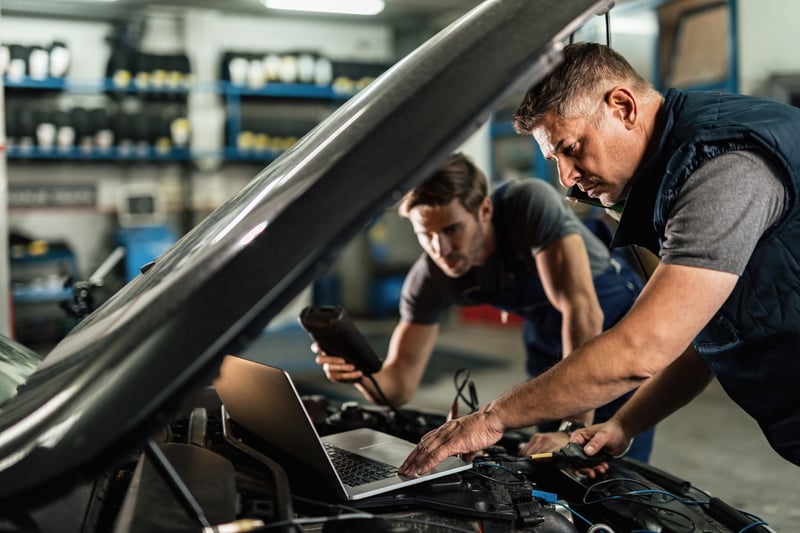
Increasingly, the job involves working with sophisticated electronics and computer systems. Mechanics use advanced diagnostic scanners to interface with a vehicle's onboard computers, interpret error codes, and pinpoint issues. With the rise of electric vehicles (EVs) and advanced driver-assistance systems (ADAS), technicians must also be skilled in servicing high-voltage battery systems, electric motors, and the intricate network of sensors and cameras that enable features like automatic emergency braking and lane-keeping assist.
Auto Mechanic Salary and Job Outlook
The median annual wage for automotive service technicians and mechanics was $49,670 in May 2024, according to the U.S. Bureau of Labor Statistics. The top 10% of earners made more than $80,850 per year. Technicians working at automobile dealerships tend to earn more, with a median annual wage of $58,580.
While the BLS projects steady employment growth with about 70,000 job openings each year from 2024 to 2034, this figure doesn't tell the whole story. The automotive industry is facing a severe and growing technician shortage. According to the TechForce Foundation, the industry needs to fill over 470,000 automotive technician positions between 2024 and 2028 to meet demand.automotivedive.com This massive gap between demand and supply creates exceptional job security and significant leverage for skilled technicians entering the field.
The High-Tech Garage: Essential Skills for the Modern Mechanic
The automotive industry is undergoing a technological revolution, and the skills required of mechanics are evolving just as quickly. Two key areas are driving this change: electric vehicles (EVs) and advanced driver-assistance systems (ADAS).
The number of EVs on U.S. roads is projected to reach between 28 and 34 million by 2030. Servicing these vehicles requires specialized knowledge of high-voltage battery systems and electric powertrains. Certifications like the ASE L3 Light-Duty Hybrid/Electric Vehicle Specialist test are becoming essential for technicians who want to work on this growing segment of the market.
At the same time, ADAS features are now nearly standard. By the 2023 model year, features like forward collision warning and automatic emergency braking were installed in over 90% of new passenger vehicles. Repairing a vehicle after even a minor collision often requires recalibrating these sensitive systems, a task that demands specific training and expensive equipment. Organizations like I-CAR offer specialized training paths to ensure technicians can perform these critical calibrations safely and correctly.
Pros and Cons of Being an Auto Mechanic
Pros
- Exceptional Job Security: The massive, well-documented technician shortage means qualified mechanics are in high demand and will be for the foreseeable future. This gives you strong job security and bargaining power.
- Hands-On Problem Solving: If you enjoy working with your hands and solving tangible puzzles, this career is incredibly rewarding. Every day brings new challenges and the satisfaction of fixing a complex machine.
- Competitive Earnings: With a solid median salary and significant potential for growth through specialization, mechanics can build a financially stable career. Experienced technicians, especially those with EV and ADAS skills, are highly sought after.
- Opportunities for Entrepreneurship: Many experienced mechanics go on to open their own independent repair shops, giving them control over their work, hours, and earning potential.
Cons
- Physically Demanding Work: The job requires standing for long hours, lifting heavy parts, and working in awkward positions. It demands good physical stamina and can lead to strain over time.
- Workplace Hazards: Mechanics are regularly exposed to chemicals, fumes, and loud noises. Adhering to strict safety protocols and using personal protective equipment is essential to minimize health risks.
- Constant Need for Learning: Vehicle technology changes at a blistering pace. What was state-of-the-art five years ago may be obsolete today. This requires a career-long commitment to training and education to stay relevant.
How to Become an Auto Mechanic
Step 1: Get Formal Training
While some mechanics learn on the job, the fastest and most reliable path is to complete a formal training program. Certificate programs can be completed in as little as 4 to 12 months and provide the foundational knowledge of automotive systems you need to get hired. An associate's degree program typically takes two years and offers more in-depth instruction.
Dreambound is the largest platform for finding vocational training programs. You can use it to find and compare auto mechanic schools near you to find the perfect class to start your career.
Step 2: Gain Hands-On Experience
After completing your training, you'll need to get an entry-level position as a trainee or apprentice mechanic. This is where you'll apply your classroom knowledge to real-world repair scenarios under the supervision of experienced technicians. This hands-on work is critical for developing your diagnostic skills and learning the practical side of the trade.
Step 3: Earn Professional Certifications
To advance your career and increase your earning potential, you must earn professional certifications. The most recognized and respected credentials in the industry come from the National Institute for Automotive Service Excellence (ASE). ASE offers a wide range of certifications covering specific areas like brakes, engine performance, and electrical systems. Earning these certifications proves your expertise to employers and customers alike.
Frequently Asked Questions
Is it stressful being an auto mechanic?
Yes, the job can be stressful. Stress often comes from the pressure to accurately diagnose complex problems under tight deadlines, the physical demands of the work, and the need to clearly communicate technical issues to customers.
What is the hardest part of being an auto mechanic?
Many mechanics find that diagnosing intermittent electrical faults and complex computer-controlled system failures is the most challenging part of the job. These issues require deep technical knowledge and a logical, systematic approach to problem-solving.
How long does it take to become an auto mechanic?
You can complete a certificate program in 4 to 12 months. An associate's degree, which provides more comprehensive training, typically takes two years. After graduation, you will continue to learn and build skills on the job.
Do you have to be certified to be an auto mechanic?
While a state license is not usually required to work as a mechanic, most reputable employers require or strongly prefer ASE certifications. These credentials are the industry standard for proving your skills and are essential for career advancement and higher pay.
Is auto mechanic a good career for the future?
Yes, it is an excellent career for the future. The critical shortage of technicians ensures high job security. Even as the industry shifts to electric vehicles, skilled mechanics will be needed to service and repair them. The job is not easily automated, and technicians who keep their skills current with new technology will have outstanding career prospects.
Final Thoughts
Being an auto mechanic is a rewarding and future-proof career for anyone with a passion for technology and a knack for problem-solving. The industry's massive technician shortage creates incredible job security, while the rapid evolution of vehicles provides opportunities for specialization and high earning potential.
If you are ready to start your journey in this in-demand skilled trade, the first step is finding the right training. Dreambound's mission is to provide all the information you need to find the perfect class. Explore programs on Dreambound today to get on the road to a successful career.
Dreambound has an extensive collection of guides that dive deep into how to get started in the field, tailored for various states. For more detailed information, we recommend exploring our other guides.
- How to Become an Auto Mechanic in Florida
- How to Become an Auto Mechanic in Kentucky
- How to Become an Auto Mechanic in Nebraska
- How to Become an Auto Mechanic in Pennsylvania
- How to Become an Auto Mechanic in Utah
Contemplating a change in your career path? Dreambound has written many comprehensive guides to aid you in making well-informed decisions.