Is Gunsmith a Good Job? Pros and Cons
See if you qualify for Gunsmith programs
Answer a few questions in 2 minutes. Free, no commitment.
A career as a gunsmith is a rewarding path for those with a passion for firearms, offering a blend of technical skill and artistry. While the U.S. Bureau of Labor Statistics doesn't track gunsmiths as a distinct occupation, related repair roles have a mean annual wage of around $38,720, with experienced professionals earning over $52,590. This guide outlines the essential steps to becoming a gunsmith, from education and licensing to navigating the modern job market.
Key Points
- The average salary for related repair fields is approximately $38,720 annually.
- Key growth areas include custom ceramic finishes and 3D-printed components, requiring new skills in digital design and material science.
- Aspiring gunsmiths must obtain a Type 01 Federal Firearms Licence (FFL), which involves a $200 application fee and strict compliance with federal regulations.
What Does a Gunsmith Do?
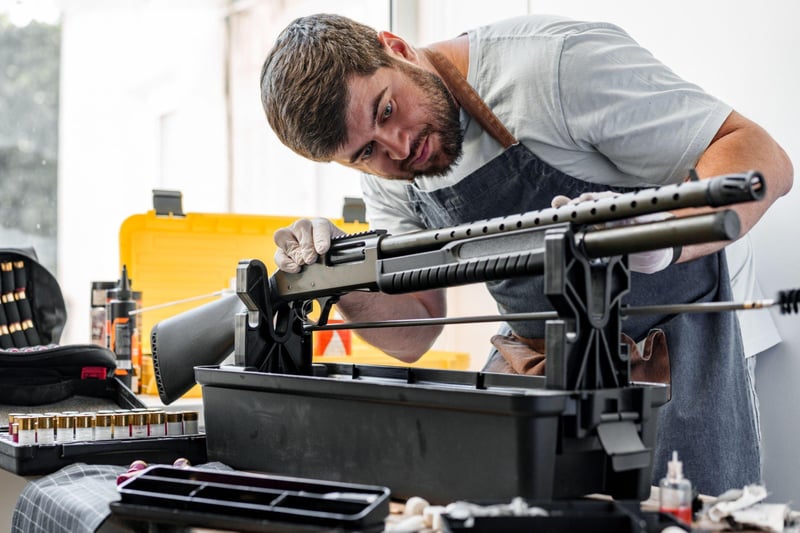
A gunsmith is a skilled artisan and technician who repairs, maintains, and customises firearms. Their daily tasks range from diagnosing mechanical failures and replacing worn parts to conducting routine safety inspections. In today's market, gunsmiths also offer specialised services like applying durable Cerakote finishes and fabricating custom parts using additive manufacturing (3D printing) to meet specific client needs.
Gunsmith Salary and Job Outlook
The Bureau of Labor Statistics (BLS) groups gunsmiths under broader categories like "Installation, maintenance, and repair workers, all other," which has a projected growth of 2.4% from 2024 to 2034. While the BLS mean annual wage for a related helper category is $38,720, earnings can exceed $52,590 for the top 10% of workers. Demand for gunsmith services is expected to remain strong, driven by over 26 million new firearm owners since 2020 and high participation in shooting sports.
Pros of Being a Gunsmith
- Job Satisfaction: For firearm enthusiasts, gunsmithing can be deeply rewarding. The opportunity to work on intricate repairs or create personalized designs for customers brings a sense of accomplishment.
- Creativity and Customization: This profession allows you to showcase your craftsmanship. Whether engraving intricate designs, carving wood, or fabricating unique parts, gunsmithing offers creative freedom.
- Variety of Work: No two days are the same for a gunsmith. Each firearm presents unique challenges, keeping the work engaging and allowing continual learning and skill development.
- Independence and Flexibility: Many gunsmiths are self-employed, giving them control over their schedules, the projects they take on, and the opportunity to run their own business.
- Job Security: Firearms remain widely used for recreation, hunting, and defense. This ensures a steady demand for skilled gunsmiths to repair, maintain, and customize firearms.
Cons of Being a Gunsmith
- Physical Demands: The job often involves standing for extended periods, lifting heavy firearms, and performing repetitive tasks, which can be physically taxing.
- Safety Hazards: Working with firearms carries inherent risks, including exposure to chemicals, loud noise, and the possibility of accidents. Adherence to safety protocols is critical.
- Limited Career Advancement: Career advancement opportunities may be limited, as many gunsmiths work independently or in small shops. This field lacks the corporate ladder found in other industries.
- Economic Factors: Earning potential can vary greatly depending on location, expertise, and the demand for services. Researching the local market is essential before committing to this career path.
How to Become a Gunsmith?
Step 1: Get the Right Training and Education
Formal training is the first step to becoming a professional gunsmith, providing foundational knowledge in firearm mechanics, safety, and repair techniques. Educational programs vary significantly in cost and duration, from a $7,600 program at Piedmont Technical College to a 14-month, $27,000 course at the Colorado School of Trades. For veterans, some institutions like the Sonoran Desert Institute offer GI Bill-approved programs, providing a valuable pathway into the trade.
Dreambound is a leading platform to explore training programs in fields like allied health and industrial trades, helping students achieve their career goals.
Step 2: Develop Essential Gunsmithing Skills
Beyond formal education, successful gunsmiths must master a blend of traditional and modern skills. Core competencies include a deep mechanical understanding, meticulous attention to detail, and strong problem-solving abilities. As the industry evolves, proficiency in new technologies is crucial, including knowledge of additive manufacturing, advanced material properties, and digital design files for creating and inspecting custom components.
Step 3: Obtain Your Federal Firearms Licence (FFL)
Operating a gunsmithing business legally in the United States requires a Type 01 Federal Firearms Licence (FFL) from the ATF. The process involves a $200 application fee and a $90 renewal fee every three years. Holding an FFL comes with significant responsibilities, including meticulous record-keeping of all firearm acquisitions and dispositions, conducting background checks for transfers, and complying with regular ATF inspections.
Step 4: Launch Your Gunsmithing Career
With training and licensure complete, you can launch your career by working for an established shop or starting your own business. Building a strong reputation requires excellent customer service and developing a niche, such as custom engraving or specialising in a specific firearm platform. While there is no official data on typical shop rates, many gunsmiths set their prices based on local market conditions, often using nearby automotive shop rates as a benchmark.
Final Thoughts
Becoming a gunsmith is a rewarding career for individuals who are passionate about firearms, detail-oriented, and committed to safety. It offers the unique satisfaction of combining hands-on craftsmanship with technical expertise. If you are ready to take the next step, Dreambound can help you explore training programs in industrial trades to achieve your career goals.